When the Beat Crosses the Line: How Loud Music at Night Is Breaking Our Communities
A public health wake-up call on how nighttime basslines are disturbing sleep, harming health, and straining neighbourly trust.
By Kegomoditswe Mosime Published: 30 June 2025
Your neighbours aren’t jealous of your playlist, your crowd, or your hustle. They’re exhausted. In South Africa, groove culture is more than nightlife. It’s a community. It’s survival. It’s a celebration. But when the clock strikes 10 PM, something shifts. The joy you feel on one side of the wall becomes a health hazard on the other side of the wall.
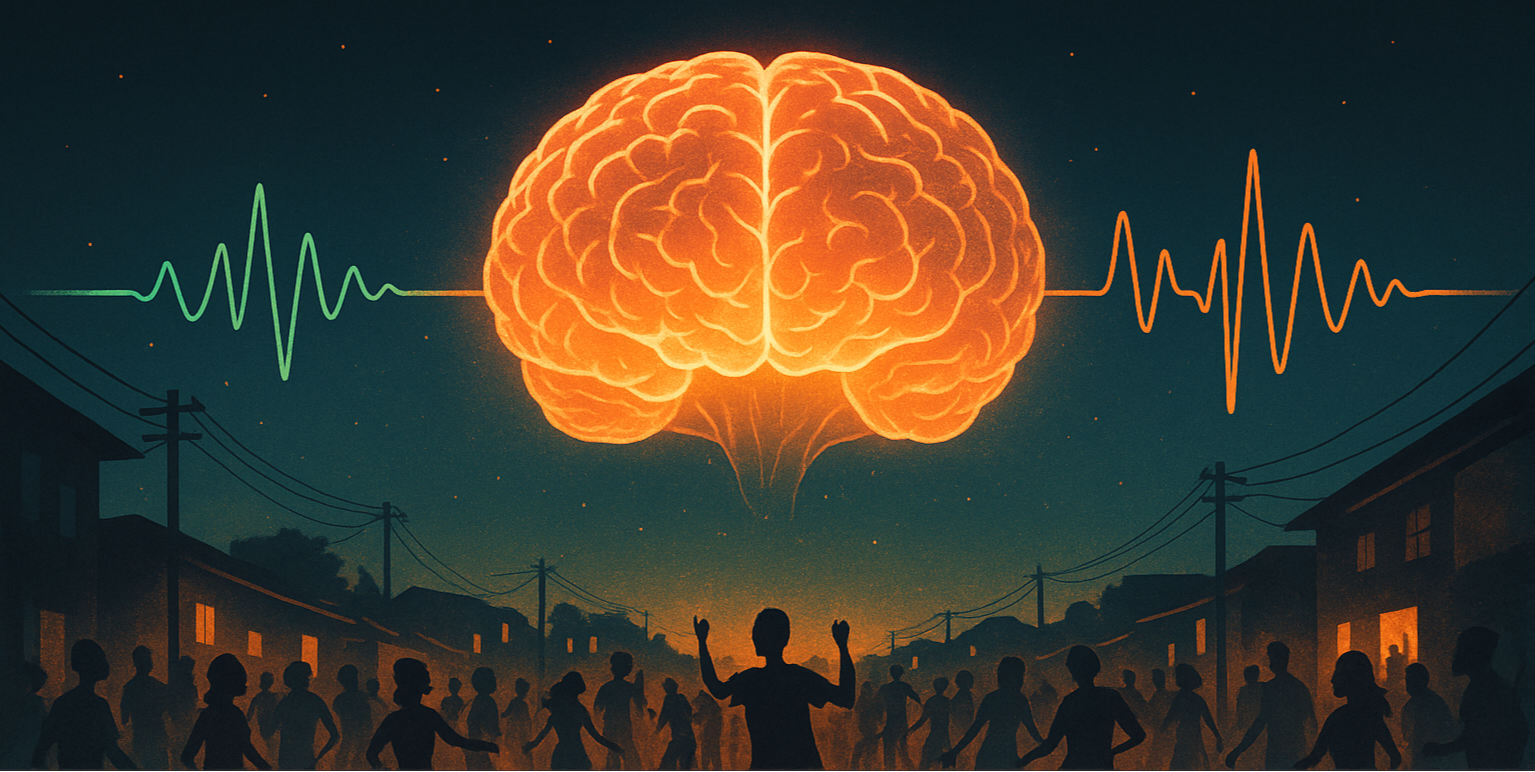
The vibe doesn’t just hit – it penetrates.
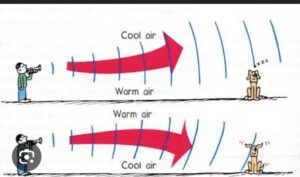
. Illustration by Thermaxx Jackets. Used for educational purposes
Quick Sound Bite Sound bends upward during the day and downward at night a phenomenon first described by 19th-century scientist John Tyndall (1859)
Why Night Sounds Travel Farther and Hit Harder Than You Think
When Silence Makes Sounds Feel Louder
Have you ever noticed how everything feels louder after dark? A car speeding past, a dog barking, the steady thump from a nearby tavern. But these aren’t just background sounds. They’re inside your home, vibrating through walls, floors, and even your chest. And when silence falls, physics takes over:
During the day, the sun heats the ground and the layer of air just above its surface. Hot air near the ground causes sound waves to scatter upwards. The farther you are from the source of the sound, the more it fades, like when your neighbour calls you from their yard during a hot afternoon and you genuinely don’t hear them. Later, they say, ‘I was calling you all day!’ and you’re not lying when you say you didn’t hear them because the heat literally bent their voice away from you.
This happens because sound waves bend away from the ground when the air near the surface is warmer than the layers above it, a phenomenon known as temperature-induced sound refraction (Penn State University Acoustics Demonstrations).
At night, the situation flips. The ground cools down, and cooler air sits near the surface beneath a layer of warmer air. This is called a temperature inversion. Instead of rising, sound waves bend back down towards the ground, causing noises to travel farther and sound louder (Missouri Citizens for Professional Acoustics). That same neighbour’s voice now carries clearly across the yard, sometimes even startling you with how loud it sounds. Your first reaction? “Why are you screaming?”
When the world goes quiet, even small sounds become a presence.
DID YOU KNOW: Lower sounds like drums, bass, and deep beats have longer wavelengths. These travel easily through walls, windows, and across long distances, especially at night when the atmosphere acts like a giant sound conductor.
The Bassline of South African Township Music Culture
South African music culture, whether it’s Amapiano, Gqom, Kwaito, or House, is built on one thing: bass. Deep, rhythmic, and relentless. Three things happen when bass-heavy music meets nighttime acoustics, and suddenly, your playlist becomes an invasion:
First, bass travels farther than treble: Bass frequencies have longer sound waves than high-pitched sounds, such as vocals or cymbals. These longer waves move more easily through both air and solid structures. At night, when the atmosphere is more stable. They travel even farther. That’s why the bass in Amapiano feels louder than the vocals, and why your playlist reaches houses you didn’t mean to target (Hopkins & Turner, 2005).
Second, Low frequencies vibrate through walls and windows: Second, low frequencies penetrate structures. Unlike higher frequencies that bounce off surfaces, bass doesn’t just pass around your home; it moves through it. Those deep vibrations shake walls, rattle windows, and travel through floors. Even at low volume, bass is felt, not just heard(Yang et al., 2017).
Third, repetitive beats stimulate the nervous system: Our bodies are wired to respond to rhythm. Fast tempos and looping beats signal the brain that something is happening, triggering a state of heightened awareness, which is only useful when your aim is to dance the whole night away. But when your body is trying to wind down, those same beats can make it harder to relax, fall asleep, or stay asleep, even if you’re not consciously listening (Chanda & Levitin, 2013).
You Know This Feeling: You’ve probably felt this before: a taxi passes your house, and the bass from its sound system makes your windows rattle. That deep, vibrating sound is felt in your bones, maybe even in your head. But then the taxi moves on, the sound fades, and your home returns to quiet. Now, imagine that same bass, but it doesn’t fade. It’s coming from within the neighbourhood, second after second, minute after minute.
This isn’t just about volume. It’s about the kind of sound we’re pumping into the night.
Our brains process rhythmic beats even when we’re asleep, which is why loud music can disrupt sleep cycles.
Urban Noise Pollution and Sleep Disruption
Sleep Science 101: How Your Body Heals Overnight
Think of sleep as your body’s nightly reboot. A powerful healing process that restores your mind and body for the next day. During sleep, your brain and body enter deep biological cycles that clear toxins, repair tissues, balance hormones, and support emotional stability. According to a position statement published by the American Academy of Sleep Medicine (AASM) in the Journal of Clinical Sleep Medicine, sleep supports multiple essential processes that help the body and brain heal and reset each night (AASM, 2023):
During deep non-REM sleep, the body produces growth hormone, which repairs muscles, tissues, and bones while also strengthening the immune system. At the same time, your brain enters detox mode. The glymphatic system flushes out waste proteins and toxins, a process that helps you think more clearly, regulate emotions, and enhance memory.
Sleep also plays a critical role in immune defence. Throughout the night, your body releases cytokines, proteins that fight infection and inflammation, especially after stress or illness.
Hormonal balance depends heavily on healthy sleep. This is when your body regulates key hormones, such as melatonin (which promotes sleep), cortisol (which manages stress), insulin (which controls blood sugar), and leptin and ghrelin (which affect hunger and metabolism). When sleep is disrupted, these systems become unbalanced, often leading to weight gain, fatigue, and even burnout.
Just as the body repairs itself, the mind does too. REM sleep is vital for emotional and psychological healing. This is when the brain processes emotions, stress, and trauma. Without enough REM sleep, people are more likely to experience anxiety, depression, and emotional instability.
The Urban Health Crisis We’re Ignoring
In townships where homes are tightly packed, insulation is thin, and windows stay open to catch a breeze, even one tavern’s sound can cut through the silence and take over the night. What starts as groove culture becomes a form of intrusion. And over time, the damage becomes personal, biological, and communal. Research from the World Health Organisation’s 2018 Environmental Noise Guidelines for the European Regionshows that chronic exposure to environmental noise, especially at night, is not just disruptive. It harms nearly every system in the body and mind:
Sleep interruption happens even when you think you’re sleeping through it. Your brain stays alert to loud or sudden sounds, leading to lighter, more fragmented sleep and long-term fatigue. The WHO estimates that over 900,000 years of healthy life are lost annually in Western Europe alone due to noise-related sleep disturbance.
Mental health takes a direct hit as well. Environmental noise affects emotional stability, increasing the risk of anxiety, depression, and burnout. Systematic reviews link noise exposure to reduced quality of life, emotional distress, and poor mental health outcomes.
Physical health deteriorates even during sleep. Night-time noise elevates stress hormones and blood pressure. According to the WHO, chronic exposure contributes to tens of thousands of years lost to cardiovascular disease, including heart attacks and hypertension.
Child development is especially at risk. The damage creeps in like slow poison. Continuous night-time noise doesn’t just disrupt sleep. It interferes with memory, learning, and emotional growth during the most critical years of brain development. According to the WHO, an estimated 45,000 years of cognitive potential are lost each yeardue to noise-related learning difficulties in children.
Community relationships begin to fracture when one person’s playlist becomes another’s problem. Sleepless nights and growing frustration lead to conflict, noise complaints, and broken neighbourly trust. It’s a hidden form of social decay that rarely appears in health statistics, but is deeply felt.
At the heart of this urban health crisis is a systemic public health issue, hidden in plain sound. If noise is stealing our rest every night, what else is it quietly stealing? Our focus? Our health? Our future?
Pearls of knowledge; “Maybe the real question isn’t whether people are overreacting It’s whether we’ve just normalised being unwell.”
Know Your Rights: A Quick Note on the Law
Legal Disclaimer: This is a simplified summary for public awareness purposes. Noise laws may differ between municipalities. For accurate legal advice or action, please consult your local bylaws or a qualified legal professional.
According to Section 8 of South Africa’s Noise Control Regulations:
“No person shall make, produce or cause a disturbing noise, or allow it to be made, produced or caused by any person, animal, machine, device or apparatus or any combination thereof.”
This applies to late-night music, loud gatherings, or machinery that interferes with someone else’s peace and rest. The law becomes even stricter between 22:00 and 06:00, when sound limits in residential areas drop to 45 decibels.
It’s not only about volume. If your noise wakes people, prevents sleep, or causes repeated disruption, it may be classified as a legal noise nuisance, even if it doesn’t seem that loud. Violations may result in the following: Additional daily fines for ongoing disturbances, fines of up to R20,000 and jail time of up to two years.
You can report noise complaints to your local municipality or SAPS. You can also take part in creating a Neighbourhood Noise Watch Committee to help address these issues collectively.
Curious about how this connects to alcohol regulations, possible silent party solutions, or ways your community can take action?
Truth in the Fine Print Municipal bylaws aren’t meant to kill the vibe. They’re designed to balance public enjoyment with the right to rest, health, and safety. Noise control laws help protect the peace, not punish theparty.
Quiet Truth
Your heart rate naturally tries to sync with music. So if you’re hearing thumping beats while in bed, your body stays in “party mode” even when you’re trying to rest.
The Last Beat: Let the Rhythm Live with Care
What comes to mind when you hear bass? Is it the heartbeat of culture and celebration, or a quiet urban health crisis hidden beneath the rhythm?
Mindful night noise isn’t about silencing culture. It’s about balance, health, and respect within our communities. Simple changes can keep the groove alive while caring for those around us: lower the bass after 10 PM, use soundproofing like curtains or foam panels, host earlier events or “sunset grooves,” and try silent parties with headphones for late-night fun.
Township groove culture is vibrant and resilient, but it doesn’t need to be loud all night to matter. Sound travels, and so does kindness.
What legacy do we want to leave behind?
Let the music live on, and let the people rest well.
Urban noise pollution is a real health crisis. Turn it down, and turn up the care.
It Is Worth Something Today
Your Voice Matters
Leave a comment and share your thoughts. Are you hearing the beat or feeling the burnout? Your words are part of the legacy, and every pearl of knowledge counts. 👇 Scroll down for the glossary, reference list, and the comment section.
Glossary
Term
Meaning (Simplified)
Amapiano
A South African music genre with deep bass, piano melodies, and house beats. Popular in townships and clubs.
Groove culture
A lifestyle centered around music, dancing, nightlife, and social gatherings in South African townships.
Tavern
A local, often informal, drinking spot in townships where people gather for music, alcohol, and socialising.
Bass
The deep, low sound in music that you often feel more than hear.
Decibel (dBA)
A unit that measures sound. Higher numbers mean louder sounds.
Noise nuisance
When sound doesn’t break the law but still disturbs people, like loud music at night.
Disturbing noise
Sound that goes above legal volume limits, often measured in decibels.
Soundproofing
Materials or methods used to block or reduce sound (e.g., curtains, foam panels).
Temperature inversion
A weather condition where warm air traps sound near the ground, making noise travel farther at night.
REM sleep
A deep stage of sleep when the brain processes emotions and memories.
Cytokines
Small proteins your body makes during sleep to fight infection and stress.
Glymphatic system
The brain’s night-time cleaning system that flushes out toxins while you sleep.
Melatonin
A hormone that helps your body know when it’s time to sleep.
Cardiovascular strain
Stress on your heart and blood vessels, often caused by poor sleep or constant noise.
Silent party
A party where people wear wireless headphones instead of using loud speakers, everyone grooves quietly.
REFERENCES
American Academy of Sleep Medicine. (2023). Sleep is essential to health: A consensus statement. Journal of Clinical Sleep Medicine. https://jcsm.aasm.org/doi/10.5664/jcsm.9476
Bernardi, L., Porta, C., & Sleight, P. (2006). Cardiovascular, cerebrovascular, and respiratory changes induced by different types of music in musicians and non-musicians: the importance of silence. Heart, 92(4), 445–452. https://doi.org/10.1136/hrt.2005.064600
When these processes are disrupted, it’s no surprise we feel the effects through weight changes, fatigue, or even burnout. I also appreciate the emphasis on REM sleep, which plays such a crucial role in emotional healing and mental stability. Insights like these remind us how important it is to prioritise quality rest.
Thank you for sharing these reflections. I really appreciate how you highlighted the role of REM sleep in emotional healing and mental stability, and the reminder to prioritise quality rest. Your perspective adds depth to the conversation around wellness and balance.



Leave a Reply