A Deep Dive into Why You’re So Territorial About Your Favourite Seat
By Kegomoditswe Mosime Published: 7 October 2025
The Hidden Psychology of Power
We laugh at Sheldon Cooper’s obsessive “That’s my spot!’’ routine on The Big Bang Theory, but the joke lands because it feels uncomfortably familiar. Whether it’s your favourite chair at the kitchen table, the prime seat in the conference room, or the corner of the couch you’ve claimed, we all have that one spot we love. And we all know the strange little spike of irritation when someone else dares to sit in it.
So, what seems like a harmless personal quirk is actually something much deeper.
Chair Conspiracy There is a unique gratification in knowing this is your seat, unchallenged and undisputed.
What Happens in Your Brain When Someone Takes “Your Spot”
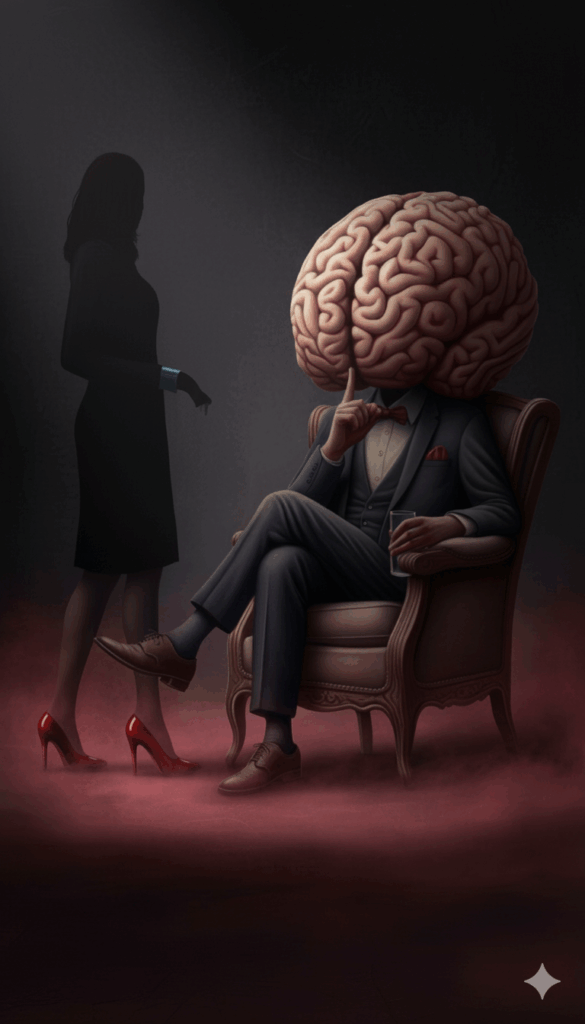
The moment you see someone in your usual seat, your brain goes into overdrive, scrambling to make sense of what’s happening and how to respond. Here’s a closer look at what’s really going on inside your head when someone takes your chair:
Your Inner GPS Goes Haywire
Deep within your temporal lobe lies the hippocampus, a seahorse-shaped structure that acts as your brain’s navigation system. It doesn’t just track your physical location; it creates rich, emotional connections between places and memories. Every time you sit in the same spot, your hippocampus quietly builds a mental file: This is where I belong. This is safe. This is mine.
Pearls of Knowledge:
🟢Neuroscientists John O’Keefe and Lynn Nadel first described the brain’s “cognitive map” system in 1978, showing how the hippocampus links memory and space.
Your Alarm System Sounds the Alert
Right next to the hippocampus is the amygdala, your brain’s threat-detection center. The moment the amygdala registers that someone has claimed your seat, it does not simply respond; it signals a clear alert: “INVASION”. Your amygdala floods your system with cortisol, a stress hormone that helps us survive genuine threats.That sudden tension in your chest when you see someone in your seat? That’s your brain preparing for conflict.
Pearls of Knowledge:
🟢Robert Sapolsky, in Behave: The Biology of Humans at Our Best and Worst (2017), makes the point that the human stress response is particularly sensitive to social status and perceived control.
Your Inner Diplomat Steps In
Fortunately, you have a more evolved part of your brain: the prefrontal cortex, situated in the anterior region of the frontal lobe. This is your brain’s executive center, responsible for planning, self-control, and social navigation.
While your amygdala screams “MINE!”, the prefrontal cortex quickly seeks cues: What are the social rules here? What’s an acceptable response? How can I get my spot back without looking crazy?
It crafts socially acceptable explanations that prevent you from demanding your chair back and causing a scene. It redirects your actions with rationalisations like “The lighting is better over there” or “that spot is closer to the charging outlet for my laptop”.
In short, the prefrontal cortex is the sophisticated part of the human brain that finds rational reasons for a fundamentally irrational, territorial instinct.
Pearls of Knowledge:
🟢Adele Diamond (2013) describes the prefrontal cortex as the brain’s executive center, governing planning, self-control, and social navigation.
The Reward System Behind the Drama
When your spatial GPS, threat detector, and social diplomat are all on the same page, reclaiming your spot feels unexpectedly rewarding, leading your brain to release dopamine and serotonin, chemicals linked to satisfaction, status and control. Dopamine gives you that hit of accomplishment and pleasure, while serotonin enhances your feeling of ownership and social standing.
DID YOU KNOW: Even the word ‘chairperson’ comes from the simple fact that whoever held the chair in a meeting held the power.
The Hidden Power of Chairs: Territory, Belonging, and Influence
The Chemistry of Belonging and Territory
According to the Oxford English Dictionary, territory is “an area of land under the jurisdiction of a ruler or state.” While this definition emphasises geography, scholars like geographer Robert David Sack, in his influential book Human Territoriality: Its Theory and History (1986), extends this concept much further and explains territory as any claimed space, physical or symbolic, that individuals or groups defend to maintain identity, control or influence.
Territory is not only marked by presence, but by the echo it leaves behind. Even emptiness can carry a boundary
Ghost Chairs: Territory Speaks in Absence
A “ghost chair” is more than an empty seat; it is a symbolic placeholder rooted in the psychology of human territoriality. Social psychologists Robert Sommer and Irwin Altman demonstrate that we don’t only guard space with our bodies, but we also leave signs of ownership. A jacket draped over a chair, a notebook on a desk, or a “reserved” sign all create what researchers call implied presence. Even when the person is not physically there, these markers communicate that the space is claimed.
Humans instinctively respect these cues because a ghost chair taps into unspoken social rules.
Reign Over Stacks;
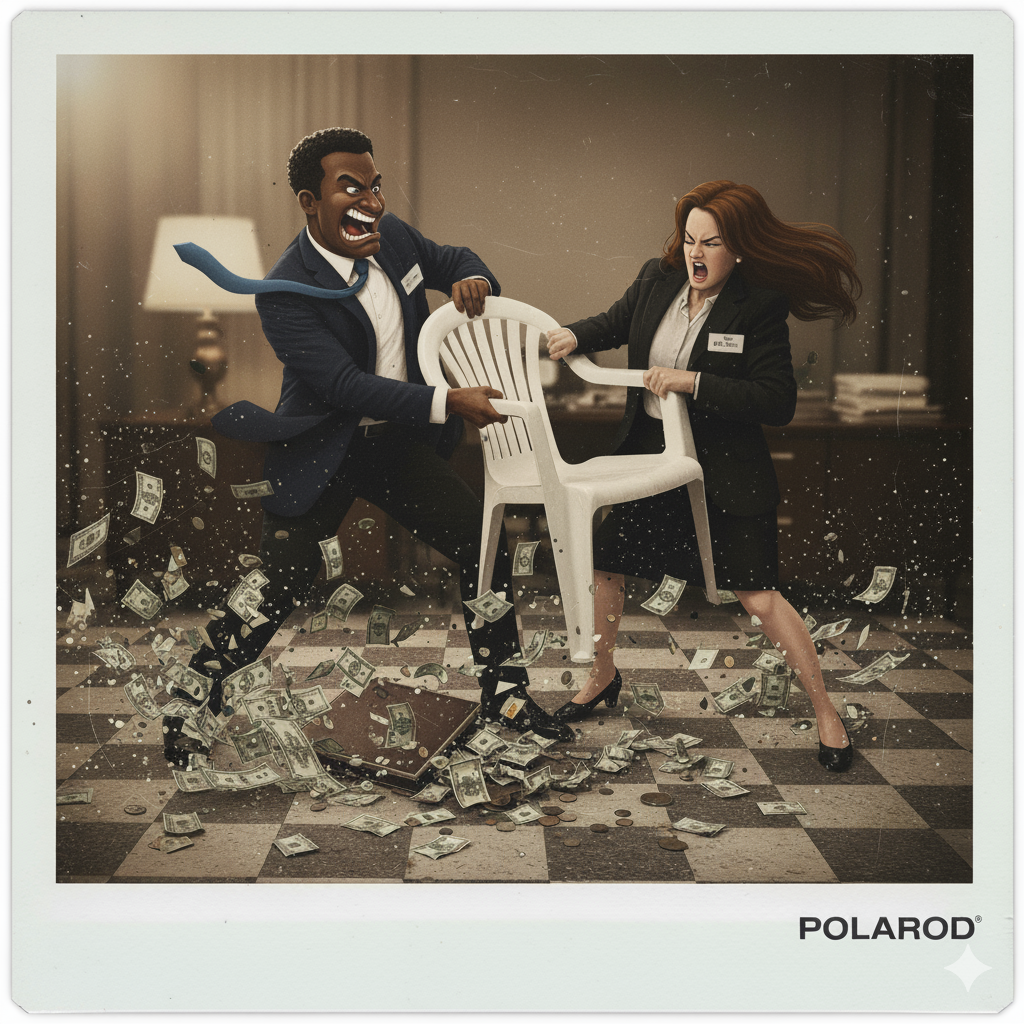
“We fight more fiercely over who sits where than over who holds the most wealth because the battle for status is often far more fundamental than the battle for riches.”
The Architecture of Authority: How Chairs Command Power
Power in Position: How Chairs Shape Authority
Power doesn’t just occupy chairs; it is engineered into them, with every height, angle, and curve serving as a silent instrument of authority, a phenomenon psychologists call the height-dominance effect, where elevated seats automatically confer status.
Design and ergonomics amplify this effect. High-backed swivel chairs enable occupants to assert control over their posture, gestures, and presence, allowing them to lean forward to intimidate, swivel to dismiss, or recline to signal confidence. In contrast, low, rigid, or fixed chairs enforce subordination through restricted movement, forcing those who occupy them into compliance. Armrests, height, and mobility are all subtle tools that broadcast power.
Positioning also carries equal weight; for example, a R1,000 chair in the center of the stage at a community pageant, where the winner is sitting, can overshadow the R5,000 leather seats the audience occupies, because the cheaper chair holds significance as it belongs to the crown holder.
Every elevation, every placement, and every design choice is calculated to shape perception, command attention, and assert control.
Power Plays in Plain Sight: Seats of Influence
The architecture of seating is a language of dominance, and this is why ordinary seats so often transform into extraordinary symbols of influence:
News Anchors: The mogul may own the network, but the anchor in the chair shapes the story millions believe. The chair broadcasts more power than the money funding it.
CEOs: The corner office isn’t just an office; it’s a seat of strategy and vision. Sitting there signals ultimate control over the company’s future.
Political Offices: Legislative and presidential seats aren’t furniture; they are battlegrounds. The person seated decides national destinies while rivals plot how to unseat them.
Judges: Elevated for a reason, the judge’s chair reminds everyone that one seated figure can alter the lives of those standing before them.
Religious Spaces: A seat near the altar or pulpit can create the illusion of divine closeness, reinforcing hierarchies of faith and influence.
Royal Thrones: A throne is never about comfort; its command is carved into wood and velvet. Armies exist to protect a single chair because whoever sits there controls everything else.
Power is protected and defended by knights, men in suits, blue lights, and armies.
Even a chair is more precious than life.
We don’t say someone “stands in power”
We say they hold a “seat of power.”
The Chair That Commands History
In 1328, a simple wooden throne in France sparked the Hundred Years’ War (Sumption, 1990). Charles IV died without a male heir, and the question was not who commanded the largest fortune or the strongest army. The question was who had the right to sit on that chair. Millions perished in a conflict not over land, but over the legitimacy of a seat. A plain throne carried a weight no amount of gold could match: the recognition that whoever occupied it held the authority to rule.
That is why, across centuries, money bends toward the chair, not the other way around.
Final Seat: Where Power Sits
At the heart of it all lies a truth both ancient and immediate: power is fragile, because territory is fragile. The battle for a chair is never just about wood, leather, or plastic. It is about belonging, authority, and survival. From thrones that sparked wars to the “first chair” at a Real Housewives reunion, we instinctively know that the right seat signals control.
Money can buy the table, the room, even the crown, but the chair decides who speaks, who rules, and who is remembered. Chairs are never neutral. They are fuses wired to history, biology, and human behaviour. Sit on the wrong one, and you inherit not just influence but danger, not just authority but the responsibility to defend it.
This obsession with chairs isn’t just cultural. It is carved into our brains. The seat you call “yours” is a map of safety, status, and claim. That’s why wars have been fought over thrones, why judges are elevated above all, and why you spend years in academia not just for knowledge, but for the chair itself.
In the end, a chair does more than hold a body. It orchestrates power. It shapes history. It bends wealth to its will. And it always has.
It Is Worth Something Today
Your Voice Matters
Leave a comment and share your thoughts. Are you hearing the beat or feeling the burnout? Your words are part of the legacy, and every pearl of knowledge counts. 👇 Scroll down for the reference list, and the comments
The idea that territory shapes authority—and that a seat can determine who speaks, who leads, and who survives—feels both ancient and strikingly relevant today. From royal thrones to academic chairs, our attachment to “our seat” reveals how deeply status and security are wired into us. The article also reminds us that power isn’t just owned; it must be defended, and sometimes the chair itself becomes the battlefield. Reflections like these offer valuable insight into social hierarchy and human nature, themes often explored in leadership and organisational studies at Telkom University Jakarta
Thank you so much for this thoughtful comment. I really appreciate the way you captured the idea that territory shapes authority, that a seat can decide who speaks, who leads, and who survives. The way you connected it to themes explored in leadership and organisational studies at Telkom University Jakarta was especially meaningful. It’s always encouraging to see the ideas in my work resonate with what you’re learning academically. Thank you for engaging so deeply with the theme.




Leave a Reply