
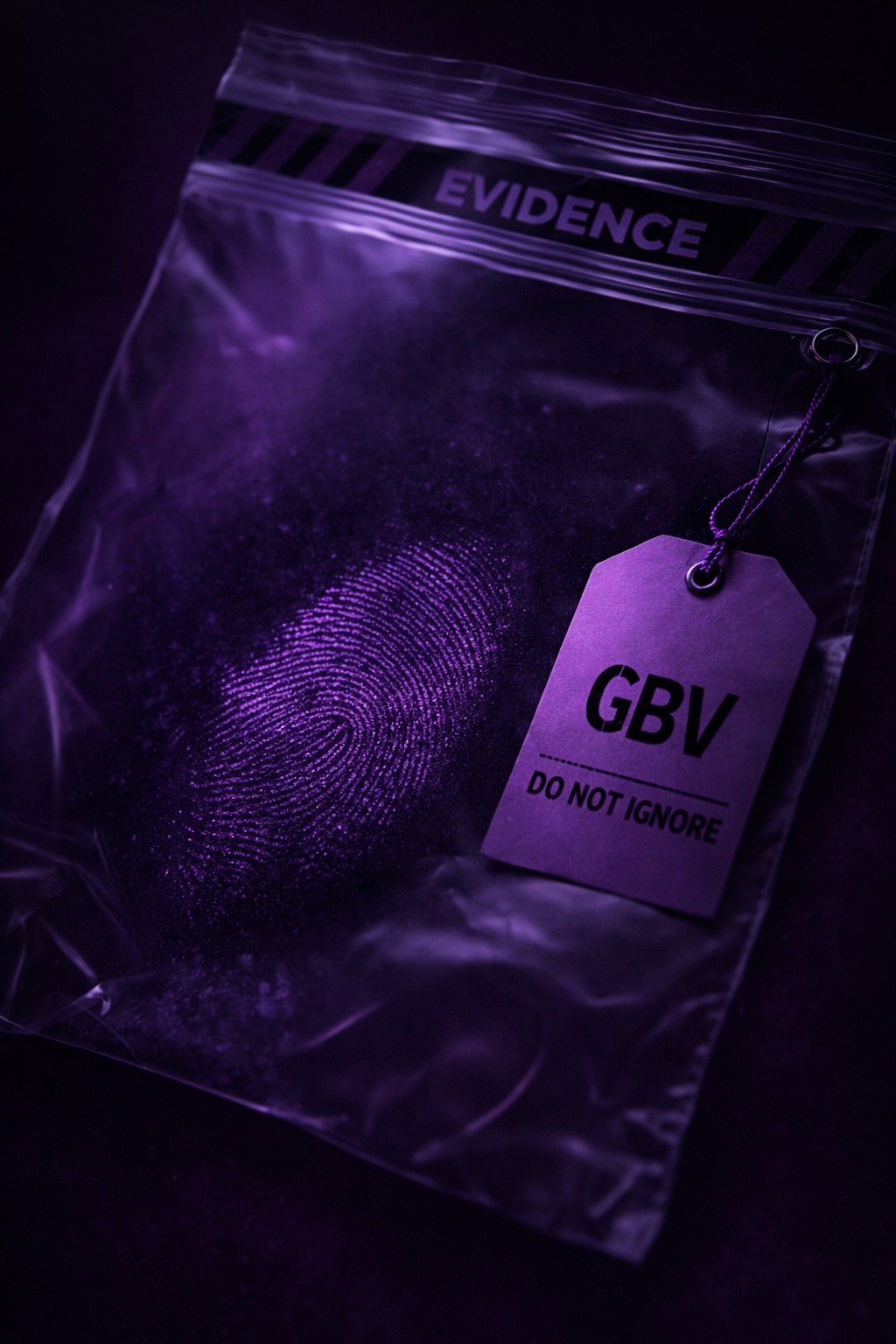
When Your Skin Speaks: The Silent Witness in South Africa’s GBV Crisis
By Kegomoditswe Mosime
Published: 24 December 2025
The Moment Everything Changed
One evening, while watching a documentary on the crime channel, a forensic investigator said something that made me pause the TV mid-sentence: “We found the perpetrator’s DNA under the victim’s fingernails.”
I paused, because I wondered how you even find DNA like that? The answer was surprisingly simple: skin. Sometimes, just a handful of skin cells under a nail can carry an entire biological signature.
The Biology Behind the Evidence
Skin as a Biological Organ
Dr Henry Gray described skin as the external integument or covering of the body in his 1858 publication Gray’s Anatomy. Modern dermatology has since expanded this definition, recognising skin not as a passive covering but as a complex organ system composed of three distinct layers (NCBI, 2025):
Epidermis: the outermost layer, constantly renewing and shedding living cells that still contain intact DNA.
Dermis: the deeper, stronger layer housing nerves, blood vessels, sweat glands, and hair follicles.
Hypodermis (subcutaneous layer): the fatty layer beneath the dermis that provides insulation and protection.
The Epidermis: Your Body’s DNA Reservoir
The epidermis is the outermost layer of the skin and the body’s first line of defence, protecting against injury, pathogens, and water loss. Rather than being static, the epidermis is a constantly renewing source of DNA because its cells, called keratinocytes, are continuously dividing, maturing, and shedding.
The deepest layer of the epidermis is the stratum basale, and it contains living cells, specifically stem cells called basal cells, which constantly undergo mitosis (cell division) to produce new keratinocytes. These cells contain intact nuclei that carry the complete genetic code.
It takes approximately 28 to 40 days for keratinocytes to migrate upward from the stratum basale through the epidermis. During this journey, the cells are pushed toward the surface to replace the outer layers, eventually flattening, losing their nuclei, and being shed at a rate of about 30,000 to 40,000 cells per day.
This is what makes the epidermis significant for forensic science. Even though the outermost cells (corneocytes) are often described as “dead skin,” many still retain usable DNA. The living cells in the stratum basale and stratum spinosum contain nuclear DNA (nDNA), the gold standard for unique identification, and shed surface cells may retain mitochondrial DNA (mtDNA) (Woollacott et al., 2025).
This means that every moment of physical contact transfers cells carrying genetic information. When someone fights back during an assault, friction and force cause these cells to detach rapidly and become trapped beneath fingernails or transferred onto clothing, creating forensic evidence that can identify an attacker and corroborate a survivor’s account.
How DNA Becomes Evidence
Touch DNA: Why Seven Cells Can Be Enough
Touch DNA, also known as trace or contact DNA, is microscopic genetic material left behind when an individual touches a surface, object, or another person.
Unlike traditional DNA evidence collected from visible biological fluids such as blood, semen, or saliva, touch DNA is typically invisible. It consists primarily of epithelial cells, specifically keratinocytes, which shed from the epidermis and are continuously lost through everyday contact and movement (Burrill et al., 2019).
What makes touch DNA significant in forensic science is how little material is required. Modern DNA amplification techniques can generate a full, identifiable genetic profile from as few as seven nucleated skin cells (keratinocytes), each carrying a complete copy of nuclear DNA.
How Touch DNA Moves
The modern forensic understanding of touch DNA originates from landmark research published in Nature in 1997 by Roland A. H. van Oorschot and Maxwell K. Jones (van Oorschot & Jones, 1997). Building on this foundation, forensic scientists now recognise several distinct mechanisms through which touch DNA can be transferred between people, objects, and environments:
Direct (Primary) Transfer: This occurs when an individual touches a surface or object directly. For example, gripping a doorknob transfers skin cells onto the handle.
Indirect (Secondary) Transfer: DNA can move from one person to an object through a carrier. For instance, shaking hands with another person transfers your DNA to their hand. If they then touch a glass, your DNA may be found on it, even though you never touched the glass yourself.
The “Shedder” Factor: Not everyone sheds skin cells at the same rate. Forensic scientists classify individuals as “good shedders,” who lose skin cells easily, or “poor shedders.” A good shedder may leave more DNA through brief contact than a poor shedder leaves through prolonged contact.
How Skin Cells End Up Under Fingernails
Skin cells accumulate beneath fingernails through two distinct mechanisms relevant to forensic interpretation:
Everyday contact (autologous DNA)
The skin constantly sheds cells, particularly from the outermost layer of the epidermis. Ordinary actions, such as scratching an itch, can cause these shed cells to become trapped beneath the fingernails. This DNA usually belongs to the individual themselves. For this reason, a person’s own DNA is expected to be present under their nails and is not considered suspicious on its own (Cook & Dixon, 2007).
Forceful contact (exogenous DNA)
During a struggle, an act of defence, or physical assault, fingernails can tear into another person’s skin. This action not only removes surface cells from the epidermis but can also penetrate deeply enough to reach the dermis. When contact is forceful enough to cause bleeding or visible injury, the DNA recovered is more substantial and could come from blood cells or deeper tissue (Piccinini et al., 2003).
Touch DNA in Practice
In 2018, when Henri van Breda claimed that a masked intruder had murdered his family with an axe in their Stellenbosch home, forensic evidence told a different story. Touch DNA recovered from the axe handle contained only family members’ genetic material, with no foreign DNA detected. Nail scrapings from Henri revealed blood from his mother and brother. The shower floor contained a mixture of Henri’s DNA with blood from multiple victims (van Breda v S, 2018).
According to Locard’s Exchange Principle, every contact leaves a trace. A violent struggle with an intruder should have left foreign biological material throughout the scene. None was found. The absence of intruder DNA, combined with the placement of family DNA in forensically significant locations, directly contradicted the defence’s account.
Henri van Breda was convicted of three counts of murder and one count of attempted murder.
If touch DNA can secure murder convictions when it is properly collected and analysed, its value in cases involving direct physical struggle during sexual assault is undeniable.
From Evidence to Accountability
When Evidence Meets Gender-Based Violence
In a country where a woman is murdered every three hours, the existence of biological evidence is not a technical detail. It is a matter of survival.
The science is clear. Human skin constantly sheds cells. Touch transfers DNA. Fingernails trap biological material during contact. Even a small number of cells can be enough to identify a person. This means that in cases involving physical struggle, the body does not remain silent. It records.
This is what makes fingernail DNA uniquely significant in gender-based violence cases. Unlike touch DNA recovered from objects, which can sometimes be explained by innocent contact or secondary transfer, DNA found beneath a survivor’s fingernails is closely tied to direct physical interaction. When someone fights back, scratches an attacker, or tries to push them away, skin cells, tissue, and sometimes blood can become trapped beneath the nails. That biological material does not appear by chance.
Forensically, the source and depth of this DNA matter. Surface epidermal cells suggest contact. Deeper tissue or blood suggests force. These distinctions allow forensic scientists to differentiate between casual touch and violent struggle, and to evaluate claims of consent or denial of contact using biology rather than speculation.
In other words, the evidence survivors are often told does not exist is already present. It is created in moments of resistance, recorded at a cellular level, and carried on the body itself. The question is no longer whether such evidence can exist in gender-based violence cases, but whether it is recognised, processed, and allowed to speak.
The Betrayal: When Silent Witnesses Are Ignored
The numbers are staggering. South Africa’s DNA backlog has exceeded 140,000 cases, with some samples waiting more than a decade to be analysed (DNAforAfrica, 2025). At the SAPS Forensic Science Laboratory in Tshwane alone, over 30,000 gender-based violence and femicide cases remain unprocessed.
The cost is real. Rape cases are struck off the roll. Survivors wait years for a resolution that never comes. Perpetrators walk free, not because of a lack of evidence, but because of a lack of analysis.
In South Africa, approximately eight percent of rape cases result in prosecution. This is not because science has failed. It is because the system has.
The Infrastructure Gap: Why Four Labs Cannot Serve Nine Provinces
The entire country, spanning nine provinces and more than 60 million people, is served by only four SAPS forensic laboratory complexes located in Pretoria, Plattekloof in Cape Town, Amanzimtoti in KwaZulu-Natal, and Gqeberha in the Eastern Cape.
This distribution leaves vast areas without direct access to forensic processing. The Plattekloof laboratory alone handles forensic work for the Western Cape and Northern Cape, while also absorbing cases from the Eastern Cape, Free State, and KwaZulu-Natal. Several provinces are without a dedicated forensic laboratory.
This problem is compounded by infrastructure failure. The Amanzimtoti forensic laboratory in KwaZulu-Natal has not been fully operational since it was first damaged by floods in 2016. Further flooding in 2022 worsened the situation. As a result, biology and chemistry exhibits are now primarily processed in Gauteng and the Western Cape, adding pressure to already overwhelmed laboratories.
Nearly nine years after the initial flood damage, the South African Police Service, through the Department of Public Works and Infrastructure, continues to spend approximately R500,000 per month on a facility it cannot fully utilise. The Portfolio Committee on Police has described this situation as a waste of resources, dereliction of duty and poor management (Portfolio Committee on Police, Parliament of South Africa).
When the newly expanded DNA analysis laboratory in Gqeberha was officially opened in August 2023 to strengthen work on gender-based violence and femicide cases, it marked progress. At the same time, it highlighted the longstanding limitations the national forensic system has had for years. Expansion is necessary, but it remains incremental when measured against overwhelming demand.
The mathematics do not support justice. Without infrastructure that matches the scale of violence, even the most reliable biological evidence cannot move cases forward.
The Paradox: Solutions Exist, But Aren’t Being Used
What makes South Africa’s forensic crisis particularly difficult to justify is that the country does not lack technical capacity.
Several accredited private forensic laboratories already operate within South Africa, offering DNA profiling services that meet international standards. These facilities have the equipment, expertise, and capacity to process forensic DNA, including evidence from gender-based violence cases.
Calls to involve the private sector are longstanding. Opposition parties have formally demanded partnerships with accredited laboratories to address the growing backlog. In KwaZulu-Natal, plans are underway to develop a new forensic DNA laboratory through a collaborative partnership between the private and public institutions. These arrangements are intended to reduce delays in GBV case processing.
In other words, the capacity exists. The need is undeniable. Yet thousands of cases remain unprocessed, including more than 30,000 gender-based violence and femicide cases waiting in Tshwane alone.
This is the paradox at the heart of the crisis. Survivors are told to trust the science. The science is sound. The laboratories are available. But the system responsible for connecting evidence to justice remains stalled by policy decisions, procurement failures, and institutional inertia.
The consequence is not delay. It is denial.
The Promise: How This Should Save Lives
Touch DNA should be a turning point in South Africa’s gender-based violence crisis.
The scale of violence is devastating. Between July and September 2024 alone, 957 women were murdered, 1,567 survived attempted murders, and 10,191 rapes were reported to police. More than half of South African women have experienced gender-based violence in their lifetime, with over two million having survived sexual violence. South Africa’s femicide rate remains five times higher than the global average.
Nearly every one of these cases involves physical contact. Every scratch, every act of resistance, every attempt to push an attacker away creates biological evidence. Skin cells transfer. Fingernails trap DNA. The body records what happens even when shock, fear, or trauma interfere with memory or speech.
This is precisely what touch DNA was meant to address. It allows investigators to work with evidence that does not rely on visible injury, eyewitnesses, or immediate reporting, making it possible to identify perpetrators even when traditional forms of evidence are absent. In doing so, it offers survivors something the system has often failed to provide: corroboration.
This promise only holds if the evidence is collected, analysed, and acted upon.
This is where the promise becomes a betrayal.
When the Body Testifies, the System Must Respond
South Africa’s gender-based violence crisis is often framed as a problem of insufficient evidence. This framing is convenient, but it is no longer accurate. As science makes clear, the human body records contact, resistance, and struggle at a cellular level. Skin sheds. DNA transfers. Fingernails trap biological material. The evidence exists long before a case reaches a police station or a courtroom.
The failure is not in the science itself, but in the systems responsible for collecting, processing, and acting on the evidence.
When forensic evidence remains unprocessed for years, when laboratories are overwhelmed by preventable infrastructure gaps, and when viable scientific capacity sits unused, the result is not merely delay. It is the failure of accountability. Survivors are asked to relive trauma, to testify repeatedly, and to trust a process that ignores the testimony already written into their bodies.
Touch DNA was never meant to replace survivor testimony. It was meant to support it. It was designed to reduce reliance on memory under trauma, to counter claims of consent or denial with biological fact, and to strengthen prosecutions where violence leaves no visible wounds. In that role, it remains one of the most powerful tools forensic science has to offer.
The question facing South Africa now is whether institutions will act on what the body has already made evident.
When skin speaks, and the system refuses to listen, silence is no longer an absence of evidence. It is a choice.
For more information on support services, survivor rights, and emergency resources, access the support page.
It Is Worth Something Today
Your Voice Matters
Leave a comment and share your thoughts. Are you hearing the beat or feeling the burnout? Your words are part of the legacy, and every pearl of knowledge counts.
👇 Scroll down for the reference list and the comments
REFERENCES
Burrill, J., Daniel, B. and Frascione, N. (2019). The transfer and persistence of touch DNA. Forensic Science International: Genetics, 38, pp. 1–10.
Available at: https://www.fsigenetics.com/article/S1872-4973(18)30274-6/abstract
Cook, R. and Dixon, L. (2006). DNA recovery from fingernail scrapings: Implications for forensic casework. Forensic Science International, 159(2–3), pp. 163–170.
Available at: https://www.sciencedirect.com/science/article/abs/pii/S0531513102005010
DNA for Africa (2025). SAAFS webinar: Forensic DNA capacity and backlog in South Africa (27 February 2025).
Available at: https://www.dnaforafrica.com/post/saafs-webinar-27-february-2025-2-1
Excellerate Services (2024). Quarterly SAPS crime statistics: Q2 update 2024/2025.
Available at: https://excellerateservices.co.za/news/168/quarterly-saps-crime-statistics-q2-update-20242025
Gorgeous Beings (2025). Support resources: South Africa GBV forensic support and hotlines.
Available at: https://gorgeousbeings.co.za/support-resources-south-africa-gbv-forensic-support-hotlines/
Locard, E. (1910). The analysis of dust traces. American Journal of Police Science, 1(4), pp. 276–298.
Referenced via forensic trace principles.
(Accessed via secondary citation).
National Centre for Biotechnology Information (NCBI) (n.d.). Integumentary system: Structure and function of skin.
Available at: https://www.ncbi.nlm.nih.gov/books/NBK537325/
Piccinini, A., et al. (2003). DNA typing from fingernail scrapings in cases of violent assault. Forensic Science International, 133(1–2), pp. 1–8.
Available at: https://www.fsigenetics.com/article/S1872-4973(06)00004-4/abstract
Republic of South Africa (2024). Quarterly crime statistics and reflection on the first 100 days in office. Speech by Minister Senzo Mchunu.
Available at: https://www.gov.za/news/speeches/minister-senzo-mchunu-quarterly-crime-statistics-and-reflection-100-days-office-25
South African Police Service (SAPS) (2024). Crime statistics.
Available at: https://www.saps.gov.za/services/crimestats.php
van Breda v S (2018). [2018] ZAWCHC 87. Western Cape High Court, South Africa.
Available at: https://www.saflii.org/za/cases/ZAWCHC/2018/87.html
Woollacott, I.O.C., Taylor, D. and Hall, A. (2025). Epidermal cell turnover and DNA persistence: Implications for forensic interpretation. Forensic Sciences, 5(1), Article 9.
Available at: https://www.mdpi.com/2673-6756/5/1/9


Leave a Reply